This is a big, giant list of Youtube tutorials that will teach you all the basic life skills you need to know in order to be a functional adult. There are a lot of important skills that aren’t included in this list, but this should be enough of a basic guide to get you started and prevent you from making a total mess of yourself. Happy adulting!
Okay, you need to make sure you play this game at some point. Maybe not today or anything, because you’ll need about thirty minutes and a serious willingness to understand how it works, but – it’s so worth it. It’s basically an answer to our occasional frustration – why do assholes always come out on top? – and the beautiful thing about it is that not only does it explain how that happens, but also how we can change it.
“In the short run, the game defines the players. But in the long run, it’s us players who define the game.”
This is fascinating if you’re into math or sociology or computer programming or all of the above.
Everyone, everywhere, without exception, should play this thing through.
Don’t check just this – check out all of Nicky Case’s work.
They’re a brilliant creator and I heavily recommend checking out at least one of their projects. Their website can be found here.
Parable of the Polygons – an interactive experiment that shows how tiny individual biases can collectively cause segregation on a massive scale.
To Build a Better Ballot – an interactive experiment that shows the alternatives to the voting systems we currently use and how they can be more representative and democratic, along with their faults.
Coming Out Simulator – a short interactive story/novel about coming out, based off of Case’s own experiences. Not one I’ve played myself but still one I can recommend.
Loopy – a very simple but useful tool to show how systems interact with each other and how things can self-propagate.
a game about news cycles, vicious cycles, infinite cycles.“ A short five-minute game about news and media. Warnings for violence, blood, death and stress.
YEETHAW resbangers, hope you’re enjoying Resbang 2018 so far! This post is specifically for our talented artists, but we have a similar one for authors right here.
Welcome to the Resbang Artist Resource Masterpost!
This is a collection of handy advice, tools, and tutorials to help you create amazing fanworks in your partnerships.
Your health is just as important to take care of as our writers’, so first things first: Treat yoself.
DesignDoll – posable 3d models for reference. (beware, free version does not allow you to save your pose, so take lots of screenshots! full version is 80 cash dolla)
PureRef – an easy way to view and sort your references without bogging down your art program
Work Timer – tell it which programs you work in, and it times how long you are in that program (also silently judges you when you’re not). Great for commissions!
Carapace – add an image, create vanishing points, profit (this link works; the one in the tumblr post does not)
Deskpins – pin a reference photo on top of any program
Remember, Resbang isn’t a competition. Just remember we are all here with you! We’re all working together to kick this challenge in the butt. We love you guys!
Have more recommendations for artists? Add them to this post! Share the wealth of knowledge ❤ Be gay do crimes!
Meowdy howdy, resbangers, and welcome to Resbang 2018! This post is specifically for the authors in our midst, but don’t worry, we’re cooking up goods for artists too!
Welcome to the revamped Writing Resource Masterpost!
Have a collection of handy advice, tools, tunes to help you write like the wind!
Remember, ResBang isn’t a competition. Just remember we are all here with you! We’re all working together to kick this challenge in the butt. We love you guys! Happy hunting.
Have more recommendations for writing? Add them to this post! Share the wealth of knowledge ❤
Ella Hattan, better known by her nom-de-guerre “Jaguarina,” was Colonel Thomas Monstery’s most accomplished student. Born in 1859 in Ohio, she would go on to become widely regarded as one of the greatest swordswomen of the nineteenth century, and perhaps of all time. Hattan would defeat more than sixty men in high-profile combats on both horseback and on foot; according to one major newspaper, more than half of these men were fencing masters.
For more details of Hattan’s extraordinary career, her training, and her lengthy master-student relationship with Monstery, see the following article:
“As soon as she comprehended what his words meant, bang, biff! she landed right and left, and he fell to the ground. ‘Get up, you coward,’ she commanded, and he, overcome by the ringing tones, very foolishly crawled to his knees. Biff! Bang! Right and left landed again, and down he went, and this time he refused to get up and sprawled on the ground, calling for help. It was several days before he was presentable, while Jaguarina laughingly showed her friends in this city the next day that she knocked the fellow down twice without even taking the skin from her rosy little knuckles.” (Los Angeles Herald)
“In the twelfth attack Jaguarina dashed to Wiedemann’s corner, there was a crash of arms, a prolonged ring of steel, a blade was seen to flash through the air, and Jaguarina threw the fragments of a broken sword from her to the ground. In an instant another sword was put into her hand, and again she dashed towards her opponent and slashed right and left, and a moment later the referee announced a point for Jaguarina…the score this time stood five to five. Jaguarina’s friends urged her to be cautious, but she, heeding nothing, rushed at her opponent and cut right and left, Weidemann parrying with all his might and skill. Recovering himself from the first shock, he aimed a cut at Jaguarina in high carte which was met by a strong parry which threw his sword arm out of line, and before he could return his weapon to protect himself, the sound of Jaguarina’s blade was heard on his cuirasse from a vigorous and unmistakable cut in carte, ending the contest with a score of six to five in favor of Jaguarina. The victor at once doffed her helmet and cuirasse and received round after round of applause from those present, many of her more enthusiastic friends throwing their caps high in the air…” (San Diego Union)
“I’m a firm believer in the philosophy that women were meant to be just as robust and hardy as men—and they can be without losing any of their womanliness. In fact, physical culture gives grace, beauty, self-reliance—while taking nothing but aches and dyspepsia.” Ella Hattan
“Despite such accounts, more than one reporter who met her, expecting to meet a “fierce faced Amazon,” was shocked to find that Hattan exuded grace, refinement, and, as one put it, “perfect self-control and sweetness.” “
“After training for three years under Monstery, Hattan left to travel the world, andbecame a sensation with the foil, saber, broadsword, singlestick, rapier, dagger, bayonet, lance, Spanish knife, and Bowie knife, defeating fencing heavyweights such as Sergeant Owen Davis of the U.S. Cavalry, the famed knife duelist Charles Engelbrecht of the Danish Royal Guard, and the fencing master E. N. Jennings of the Royal Irish Hussars.”
“Under Monstery’s tutelage, Hattan would go on to become recognized as one of the greatest swordswomen of the nineteenth century, and perhaps of all time.”
Sure, having a king/queen is simple, but have you ever tried:
Democracy
Multiple nobles and they all have the same amount of power (lot of conflict potential)
You can become ruler by defeating the current ruler in a fight
The merchants run everything
A noble and a parliament rule
The most intelligent people rule
…
There are thousands of possibilities, be creative!
Older post, but I highly encourage it! Try out the weirdest stuff! Try things you think would never work in the real world because this is your world and if you say (insert political system believed to not work) works then it does
Here’s a list of Society and Government types I’ve stolen directly from the worldbuilding section of some rulebooks:
Anarchy: the social conscience maintains order, but there are no laws
Athenian Democracy: Every citizen can vote on every new law
Representative Democracy: Elected representatives form a congress or government
Clan: Pretty much whoever is older is in charge, traditions are strongly adhered to, and society as a whole is split cross many tribes that are generally similar (and usually allied) but with their own quirks and traditions
Caste: A lot like a Clan structure, but each clan has a set role in society that usually renders them co-dependent. These Castes usually follow a social heirarchy
Dictatorship: One person controls everything, and they will later pass the right to rule to someone else, whether by inheritance, election, duelling, or some other method. Not all dictatorships are bad, especially if they are formed in times of crisis or rebellion, but even those started with the best intentions may quickly corrupt.
Plutocracy: Whoever has money is in charge.
Technocracy: A group of scientists and engineers have complete control and do everything they can to run the country at maximum efficiency. The more competent they are, the more likely this is to be viewed as a good thing.
Thaumocracy: Like a technocracy, but run by a science-like form of magic (like wizards and arcanists rather than shamans and witches)
Theocracy: The Church controls everything, and their religious law is civil law. Whether this religion is real, is fake but knows it, or believes its own lies is up to you.
Corporate State: Powerful mercantile organisations have taken control of entire regions. This is a lot like a Technocracy, but with a corporate structure and a focus on maximum profitability (and no-one else is going to set them a minimum wage)
Feudal: A lot like a dictatorship, but subsidiary lords are assigned their own local power and can enforce their own law without notifying the larger state.
***VARIATIONS***
Bureaucracy: Government runs very slowly and the public has effectively no control. There is a lot of red tape and taxation is high.
Colony: Government is dependent on a mother society
Cybercracy: A computer system is the state administrator. Hopefully the programmers did a good job…
Matriarchy: Positions of authority are female-exclusive.
Meritocracy: Positions of authority require rigorous testing to qualify for.
Military Government: The Military control everything, usually but not always totalitarian
Monarchy: The person in charge may call themselves king or queen, but fundamentally this is either a dictatorship or a feudal society.
Oligarchy: A small organisation is in control, and it elects its own members.
Patriarchy: like a matriarchy, but for guys. what a novel idea
Sanctuary: A society that protects the people other societies hunt (that may be considered criminals or terrorists by other nations)
Socialist: The government directly manages the economy, education is easy to get, the government intervenes to get everyone possible a job. This is likely to collapse quickly without good technology or magic to assist it.
Subjugated: The society as a whole is completely controlled by an outside force.
Utopia: A perfect society where everyone is satisfied and nothing sinister is happening behind the scenes we swear.
Big Horses are a Very New Thing and they Likely Didn’t Exist in your Historical and/or Fantasy Settings.
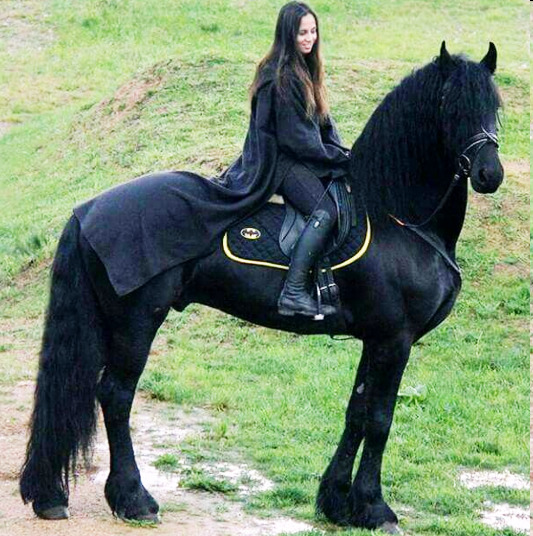
You’ve all seen it in every historical piece of media ever produced. Contrary to popular belief, a big black horse with long legs and long flowing mane is not a widespread or even a particularly old type of horse.
THIS IS NOT A MEDIEVAL THING. THIS IS NOT EVEN A BAROQUE THING. THIS IS A NINETEENTH CENTURY CITY CARRIAGE HORSE.
All the love to fancy Friesian horses, but your Roman general or Medieval country heroine just really couldn’t, wouldn’t, and for the sake of my mental health shouldn’t have ridden one either.
Big warmblood horses are a Western European and British invention that started popping up somewhere around 1700s when agriculture and warfare changed, and when rich folks wanted Bigger Faster Stronger Thinner race horses. The modern warmblood and the big continental draught both had their first real rise to fame in the 1800s when people started driving Fancy Carriages everywhere, and having the Fanciest Carriage started to mean having the Tallest and Thinnest Horses in the town.
Before mechanised weaponry and heavy artillery all horses used to be small and hardy easy-feeders. Kinda like a donkey but easier to steer and with a back that’s not as nasty and straight to sit on.
SOME REAL MEDIEVAL, ROMAN, OTTOMAN, MONGOL, VIKING, GREEK and WHATEVER HISTORICALLY PLAUSIBLE HORSES FOR YOU:
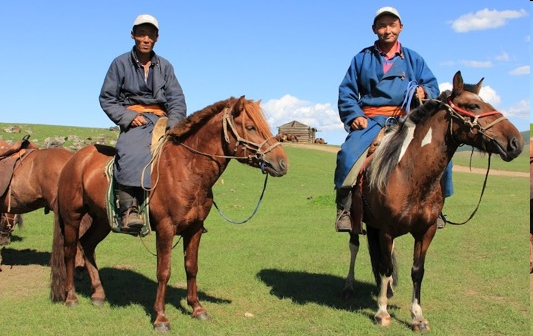
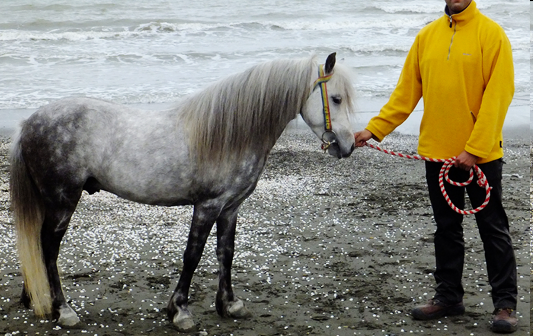
“Primitive”, native breeds all over the globe tend to be only roughly 120-140 cm (12.0 – 13.3 hh) tall at the withers. They all also look a little something like this:
Mongolian native horse (Around 120-130 at the withers, and decendants of the first ever domesticated horses from central Asia. Still virtually unchanged from Chinggis Khan’s cavalry, ancestor to many Chinese, Japanese and Indian horses, and bred for speed racing and surviving outdoors without the help of humans.)
Carpathian native horse / Romanian and Polish Hucul Pony (Around 120-150 at the withers, first mentioned in writing during the 400s as wild mountain ponies, depicted before that in Trajanian Roman sculptures, used by the Austro-Hungarian cavalry in the 19th century)
Middle-Eastern native horse / Caspian Pony (Around 100-130 at the withers, ancestor of the Iranian Asil horse and its decendants, including the famous Arabian and Barb horses, likely been around since Darius I the Great, 5th century BC, and old Persian kings are often depicted riding these midgets)
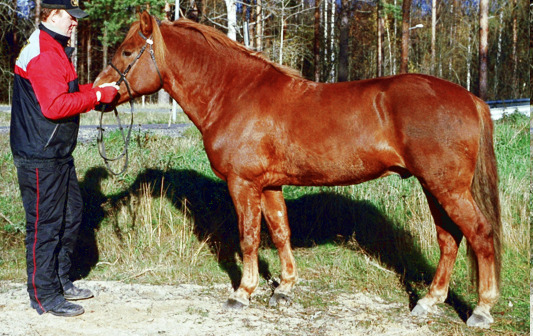
Baltic Sea native horse / Icelandic, Finnish, Estonian, Gotland and Nordland horses (Around 120-150 at the withers, descendant of Mongolian horses, used by viking traders in 700-900 AD and taken to Iceland. Later used by the Swedish cavalry in the 30 years war and by the Finnish army in the Second World War, nowadays harness racing and draught horses)
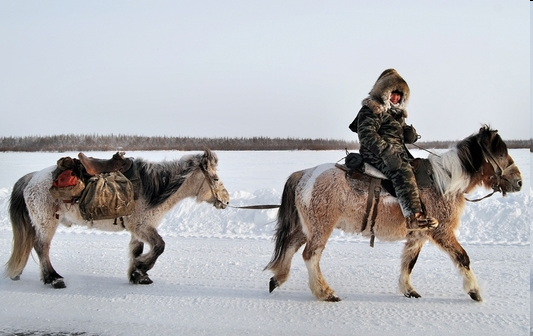
Siberian native horse / Yakutian pony (Around 120-140 at the withers, related to Baltic and Mongolian horses and at least as old, as well-adapted to Siberian climate as woolly mammoths once were, the hairiest horse there is, used in draught work and herding)
Mediterranean native horse / Skyros pony, Sardinian Giara, Monterufolino (Around 100-140 at the Withers, used and bred by ancient Greeks for cavalry use, influenced by African and Eastern breeds, further had its own influence on Celtic breeds via Roman Empire, still used by park ranger officers in Italy)
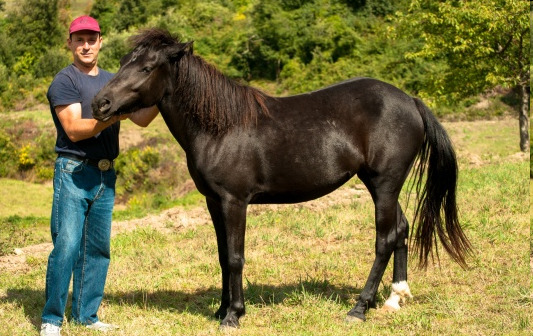
British Isles’ native horse / various “Mountain & Moorland” pony breeds (Around 100-150 at the withers, brought over and mixed by Celts, Romans and Vikings, base for almost every modern sport pony and the deserving main pony of all your British Medieval settings. Some populations still live as feral herds in the British countryside, used as war mounts, draught horses, mine pit ponies, hunting help and race horses)
So hey, now you know!
I love this so much – and now I know why Tall Lanky Thin horses have a terryfying vibe to them, and the “primitive” native pony-like breeds awake in me only hope and trust.
such valid historical finger-eaters here
Okay, so, you got me, I’m a horse person. I used to take riding lessons and would read tons of books about horses as a kid and teenager. You could definitely say I was that weird horse girl, and I really have to say even though this is really informative about the native types of equines in the general European and Middle Eastern areas how FULL OF BS THIS POST IS, SO BUCKLE UP BUTTER CUPS YOU ALL ARE GONNA DO A LEARN TODAY.
So what OP said about the Roman General not riding a Middle Ages war horse is actually correct and here’s why: The Western Roman Empire fell BEFORE THE MIDDLE AGES BEGAN AND IS WHAT TRIGGERED THE BEGINNING OF THE MIDDLE AGES IN THE GODDAMN FIRST PLACE. And for those of you who aren’t aware, the Middle Ages was roughly a 1000 year period that consisted of the 5th through the 15th Century; aka. 400AD-1400AD, and ended with the beginning of the Renaissance. (x, x)
First off, NONE OF THOSE ARE HORSES. THOSE ARE PONIES. You cannot ride ponies into battle while dressed in a full suit of armor because their legs would buckle out from underneath them because they simple aren’t large enough or strong enough o be able to carry the weight of a knight in plate armor. Hence the term WARHORSE. OP literally names off a bunch of PONY breeds, and while ponies were used commonly back then as cart and pack animals, they were not used in battle and thus would be bad steeds for fantasy and historical fictional characters that planned on doing any sort of fighting.
Secondly, the Fresian horse breed certainly WAS around during the Middle Ages because it originated in the Netherlands before the 4th Century and is literally known as the ‘Knight’s Breed’ because their size, strength, and stamina that allowed them to be able to carry the extra weight of a knight, his armor, and the armor the horse would be wearing as well. (x)
AND LASTLY, I’M GONNA HELP OUT ALL MY WRITER FRIENDS BY WRITING UP WHAT MIDDLE AGE WAR HORSES ACTUALLY WERE NAMED, THEIR USES, AND WHAT THEY MIGHT HAVE LOOKED SOMETHING LIKE.
Oh thank god someone wrote the post so I didn’t have to because the original post just had me all what the actual fuck are you smoking.
Thank you to the angry horse person who wrote this up better than my very short “have you mother fuckers heard of Arabians or Akhal-Tekes before” because you did it waaay better than I could have.
I have been summoned (more than once). Here, apparently, is the post with additional information. (As demonstrably not an animal person, I have to rely on other people, so sorry about that, and also thanks for those who corrected it.)
THOU is the subject (Thou art…) THEE is the object (I look at thee) THY is for words beginning in a consonant (Thy dog) THINE is for words beginning in a vowel (Thine eyes)
this has been a psa
Also, because H was sometimes treated as a vowel when the grammar rules for thou/thee/thy/thine were formed,THINE can also be used for words beginning with H. For example, both “thy heart” and “thine heart” appear in Elizabethan poetry.
For consistency, however, if you’re saying “thine eyes”, make sure you also say “mine eyes” instead of “my eyes”.
Further to the PSA:
Thou/thee/thine is SINGULAR ONLY.
Verbs with “thou” end in -st or -est: thou canst, thou hast, thou dost, thou goest. Exception: the verbs will, shall, are, and were, which add only -t: thou wilt, thou shalt, thou art, thou wert.
Only in the indicative, though – when saying how things are (“Thou hast a big nose”). Not in the subjunctive, saying how things might be (“If thou go there…”) nor in the imperative, making instructions or requests (“Go thou there”).
The -eth or -th ending on verbs is EXACTLY EQUIVALENT TO THE -(e)s ENDING IN MODERN ENGLISH.
I go, thou goest, she goeth, we go, ye go, they go.
If you wouldn’t say “goes” in modern English, don’t say “goeth” in Shakespearean English.
“Goeth and getteth me a coffee” NO. KILL IT WITH FIRE.
Usually with an imperative you put the pronoun immediately after the verb, at least once in the sentence (“Go thou” / “Go ye”).
YE is the subject (Ye are…). YOU is the object.
Ye/you/your is both for PLURALS and for DEFERENCE, as vous in French.
Big Horses are a Very New Thing and they Likely Didn’t Exist in your Historical and/or Fantasy Settings.
You’ve all seen it in every historical piece of media ever produced. Contrary to popular belief, a big black horse with long legs and long flowing mane is not a widespread or even a particularly old type of horse.
THIS IS NOT A MEDIEVAL THING. THIS IS NOT EVEN A BAROQUE THING. THIS IS A NINETEENTH CENTURY CITY CARRIAGE HORSE.
All the love to fancy Friesian horses, but your Roman general or Medieval country heroine just really couldn’t, wouldn’t, and for the sake of my mental health shouldn’t have ridden one either.
Big warmblood horses are a Western European and British invention that started popping up somewhere around 1700s when agriculture and warfare changed, and when rich folks wanted Bigger Faster Stronger Thinner race horses. The modern warmblood and the big continental draught both had their first real rise to fame in the 1800s when people started driving Fancy Carriages everywhere, and having the Fanciest Carriage started to mean having the Tallest and Thinnest Horses in the town.
Before mechanised weaponry and heavy artillery all horses used to be small and hardy easy-feeders. Kinda like a donkey but easier to steer and with a back that’s not as nasty and straight to sit on.
SOME REAL MEDIEVAL, ROMAN, OTTOMAN, MONGOL, VIKING, GREEK and WHATEVER HISTORICALLY PLAUSIBLE HORSES FOR YOU:
“Primitive”, native breeds all over the globe tend to be only roughly 120-140 cm (12.0 – 13.3 hh) tall at the withers. They all also look a little something like this:
Mongolian native horse (Around 120-130 at the withers, and decendants of the first ever domesticated horses from central Asia. Still virtually unchanged from Chinggis Khan’s cavalry, ancestor to many Chinese, Japanese and Indian horses, and bred for speed racing and surviving outdoors without the help of humans.)
Carpathian native horse / Romanian and Polish Hucul Pony (Around 120-150 at the withers, first mentioned in writing during the 400s as wild mountain ponies, depicted before that in Trajanian Roman sculptures, used by the Austro-Hungarian cavalry in the 19th century)
Middle-Eastern native horse / Caspian Pony (Around 100-130 at the withers, ancestor of the Iranian Asil horse and its decendants, including the famous Arabian and Barb horses, likely been around since Darius I the Great, 5th century BC, and old Persian kings are often depicted riding these midgets)
Baltic Sea native horse / Icelandic, Finnish, Estonian, Gotland and Nordland horses (Around 120-150 at the withers, descendant of Mongolian horses, used by viking traders in 700-900 AD and taken to Iceland. Later used by the Swedish cavalry in the 30 years war and by the Finnish army in the Second World War, nowadays harness racing and draught horses)
Siberian native horse / Yakutian pony (Around 120-140 at the withers, related to Baltic and Mongolian horses and at least as old, as well-adapted to Siberian climate as woolly mammoths once were, the hairiest horse there is, used in draught work and herding)
Mediterranean native horse / Skyros pony, Sardinian Giara, Monterufolino (Around 100-140 at the Withers, used and bred by ancient Greeks for cavalry use, influenced by African and Eastern breeds, further had its own influence on Celtic breeds via Roman Empire, still used by park ranger officers in Italy)
British Isles’ native horse / various “Mountain & Moorland” pony breeds (Around 100-150 at the withers, brought over and mixed by Celts, Romans and Vikings, base for almost every modern sport pony and the deserving main pony of all your British Medieval settings. Some populations still live as feral herds in the British countryside, used as war mounts, draught horses, mine pit ponies, hunting help and race horses)
So hey, now you know!
I love this so much – and now I know why Tall Lanky Thin horses have a terryfying vibe to them, and the “primitive” native pony-like breeds awake in me only hope and trust.
such valid historical finger-eaters here
So what kind of horses carried the occasional metal-encased dude (and probably a handful of other unusually heavy things)?
Also, for that matter, what’s a “palfrey” look like? I’ve never known what to picture for that.
I believe a “palfrey,” or horse for medieval women, was distinguished not by breed or bloodline but by its ability to amble, which is a specific gait. I recall anecdotally (but cannot cite) that the ambling gait was once highly developed in England, although today it’s mostly preserved in Icelandic ponies. So perhaps picturing a small, comfortable pony – light but not delicate, and a bit friendly and tubby-looking? Like a Paso Fino, but not so extreme?
As for medieval European warhorses, the Great Big Horse that carried an armored medieval knight was called a destrier, as distinct from a charger, courser or palfrey. We also know that like the knights of their time, they probably weren’t physically BIG so much as they were STRONG for their size – but that’s where my own knowledge of it ends.
Wikipedia suggests that it is a topic of frequent discussion but no particular consensus? Again, it appears to have been a general description of a type of horse, rather than a breed. I really like this piece of evidence, though:
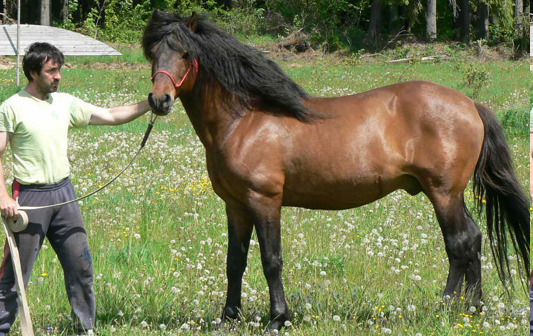
An analysis of medieval horse armour located in the Royal Armouries indicates the equipment was originally worn by horses of 15 to 16 hands,[7] about the size and build of a modern field hunter or ordinary riding horse
So maybe we could picture something like this Upstanding Trustworthy Citizen??????






 part-time recluse